
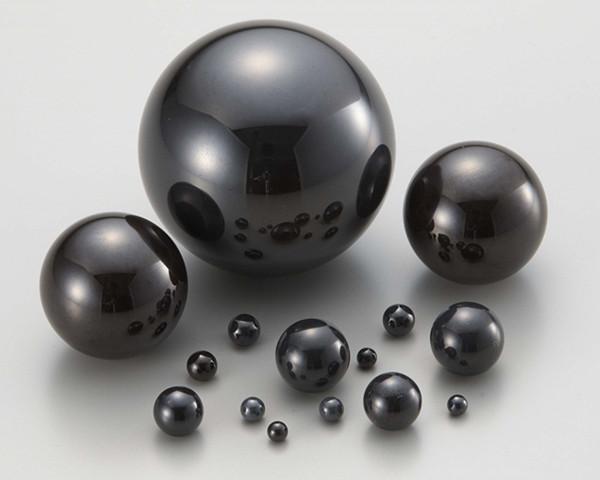
When traditional steel components reach their performance limits, advanced ceramics often become the next engineering solution.
Among structural ceramics, silicon nitride (Si₃N₄) has become a preferred material for high-performance bearings and precision mechanical components due to its unique combination of low density, high strength, excellent wear resistance, and outstanding thermal shock capability.
But what makes silicon nitride different from conventional bearing materials?
1. Lightweight Performance for High-Speed Motion
One of the key advantages of silicon nitride is its low density.
Compared with steel, silicon nitride ceramic components are significantly lighter. This reduces centrifugal forces during high-speed rotation, allowing ceramic bearings to operate at higher speeds with lower friction and reduced heat generation.
This makes Si₃N₄ particularly suitable for:
- High-speed machine tool spindles
- Semiconductor manufacturing equipment
- Precision automation systems
- Aerospace mechanisms
For engineers designing rotating equipment, reducing moving mass can directly improve efficiency and stability.
2. Superior Wear Resistance and Long Service Life
Silicon nitride has a very high hardness and excellent resistance to abrasive wear.
Unlike metals, ceramic surfaces do not easily deform under mechanical loads. This makes Si₃N₄ components suitable for environments where dimensional stability and long-term precision are critical.
Typical applications include:
- Ceramic bearing balls
- Wear-resistant sleeves
- Pump components
- Positioning elements
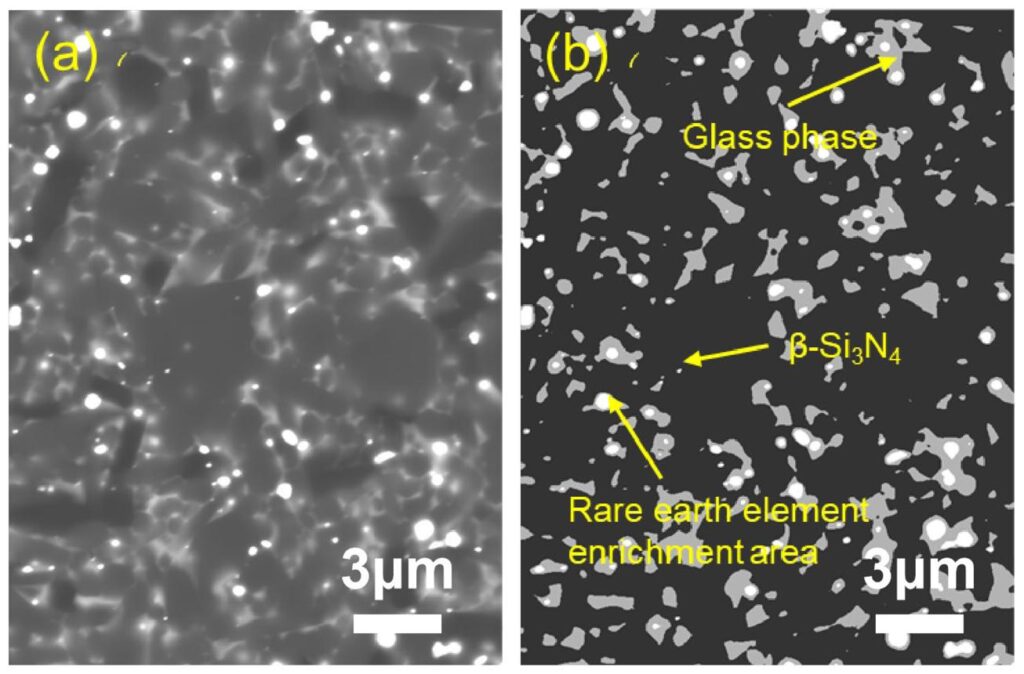
However, ceramic performance depends strongly on microstructure, surface finish, and manufacturing quality. A well-designed ceramic component requires more than simply selecting a high-hardness material.
3. Excellent Thermal Shock Resistance
Many industrial applications involve rapid temperature changes.
Metal components may experience thermal expansion, deformation, or reduced performance under repeated thermal cycles.
Silicon nitride offers:
- Low coefficient of thermal expansion
- High thermal shock resistance
- Stable mechanical properties at elevated temperatures
This makes it valuable in applications such as:
- High-temperature processing equipment
- Semiconductor manufacturing systems
- Laser equipment
- Industrial heating environments
4. Electrical Insulation and Corrosion Resistance
Another important advantage of silicon nitride is its electrical insulating capability and chemical stability.
In environments where electrical isolation, contamination control, or corrosion resistance are required, silicon nitride can provide advantages over metallic materials.
Examples include:
- Electrical equipment components
- Chemical processing systems
- Vacuum equipment
- Precision positioning systems
5. Engineering Considerations When Designing Silicon Nitride Parts
Although silicon nitride offers excellent properties, successful application depends on proper engineering design.
When specifying Si₃N₄ components, engineers should consider:
Component geometry
Ceramics have high compressive strength but lower tensile tolerance compared with metals. Avoiding sharp corners and unnecessary stress concentration is essential.
Surface finishing
For precision applications such as bearings and sealing components, surface roughness and dimensional accuracy directly influence performance.
Manufacturing capability
Processes such as precision grinding, lapping, and inspection are critical for achieving reliable ceramic components.
Operating environment
Temperature, loading conditions, lubrication, chemical exposure, and service cycles should all be evaluated during material selection.
Conclusion
Silicon nitride is not simply a replacement for metal. It is an engineered solution for applications where traditional materials cannot provide the required combination of speed, wear resistance, thermal stability, and precision.
From high-speed bearings to semiconductor equipment components, Si₃N₄ continues to enable next-generation mechanical systems.
At Hephys Solutions, we provide custom silicon nitride ceramic components based on engineering drawings, application requirements, and performance targets.
If you are developing a precision ceramic component, share your design requirements and operating conditions with our engineering team. We can help evaluate material selection, manufacturing feasibility, and optimization opportunities.