
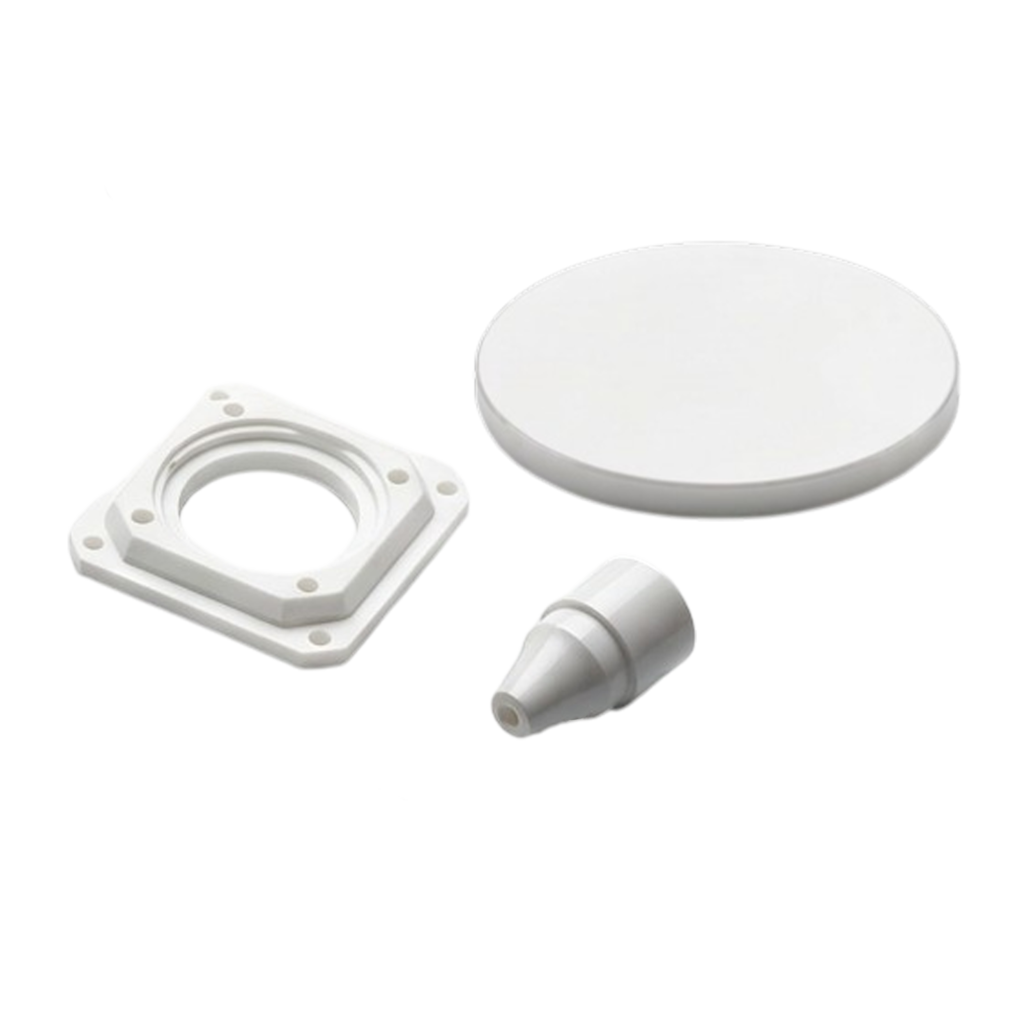
Custom Alumina Ceramic (Al2O3) Components
Engineered for extreme wear, high dielectric isolation, and thermal resistance. Sourced from ISO-certified production lines with ±0.001mm machining tolerances, delivering standard shapes and a variety of customizations.
Precision-Graded Alumina (Al₂O₃), the Best Choice to Meet Your Needs
Alumina is the most widely utilized technical ceramic due to its excellent balance of mechanical, electrical, and thermal properties. It can optimize both your component's lifespan and manufacturing cost. Purities ranging from 95% to 99.8% are available to be provided.
96% Alumina
The Industrial Workhorse. Best for general mechanical wear, thermal shock resistance, and cost-effective bulk production (e.g., substrates, heating elements).
99% Alumina
The High-Performance Grade. Enhanced mechanical strength and chemical corrosion resistance. Ideal for severe industrial environments and chemical processing.
99.5% Alumina
The Precision Standard. Superior electrical insulation and surface finishability. Widely specified for laser technology, medical equipment, and wear components.
99.7% Alumina
Ultra-High Purity. Near-zero contamination, exceptional plasma resistance, and maximum operating temperatures (up to 1700℃ ). Tailored for semiconductor processing.
Properties of Alumina Ceramic Parts
| Property (Unit) | Testing Standard | 96% Al₂O₃ | 99% Al₂O₃ | 99.5% Al₂O₃ | 99.7% Al₂O₃ |
|---|---|---|---|---|---|
| Density (g/cm³) | DIN EN 623-2 | ≥ 3.70 | ≥ 3.85 | ≥ 3.89 | ≥ 3.92 |
| Water Absorption (%) | DIN EN 623-2 | 0 (Gas Tight) | 0 (Gas Tight) | 0 (Gas Tight) | 0 (Gas Tight) |
| Vickers Hardness (HV₁₀) | DIN EN 843-4 | 1200 | 1450 | 1500 | 1600 |
| Flexural Strength (MPa) | DIN EN 843-1 | 300 | 350 | 380 | 400 |
| Compressive Strength (MPa) | DIN EN 843-1 | 2000 | 2500 | 2800 | 3000 |
| Young's Modulus (GPa) | DIN EN 843-2 | 300 | 350 | 370 | 380 |
| Thermal Conductivity (W/m·K) | DIN EN 821-2 | 24 | 28 | 30 | 32 |
| Coefficient of Thermal Expansion (10⁻⁶/°C) 20-1000°C | DIN EN 821-1 | 7.9 | 8 | 8.1 | 8.2 |
| Thermal Shock Resistance (ΔT °C) | DIN EN 820-3 | 220 | 200 | 180 | 180 |
| Max. Operating Temp. (°C) | / | 1600 | 1700 | 1750 | 1750 |
| Volume Resistivity (Ω·cm) at 20°C | DIN EN 60672-2 | > 10¹⁴ | > 10¹⁴ | > 10¹⁴ | > 10¹⁴ |
| Dielectric Strength (kV/mm) | DIN EN 60672-2 | 15 | 17 | 18 | 20 |
| Dielectric Constant (1 MHz) | DIN EN 60672-2 | 9 | 9.6 | 9.7 | 9.8 |
| Dissipation Factor (1 MHz) | DIN EN 60672-2 | 10 × 10⁻⁴ | 4 × 10⁻⁴ | 2 × 10⁻⁴ | 1 × 10⁻⁴ |
| Acid/Alkali Resistance | / | Good | Excellent | Excellent | Outstanding |
Comprehensive Alumina Manufacturing Capabilities
We support multiple forming methods including Isostatic Pressing, Dry Pressing, and Ceramic Injection Molding (CIM) to match your volume and geometric complexity.
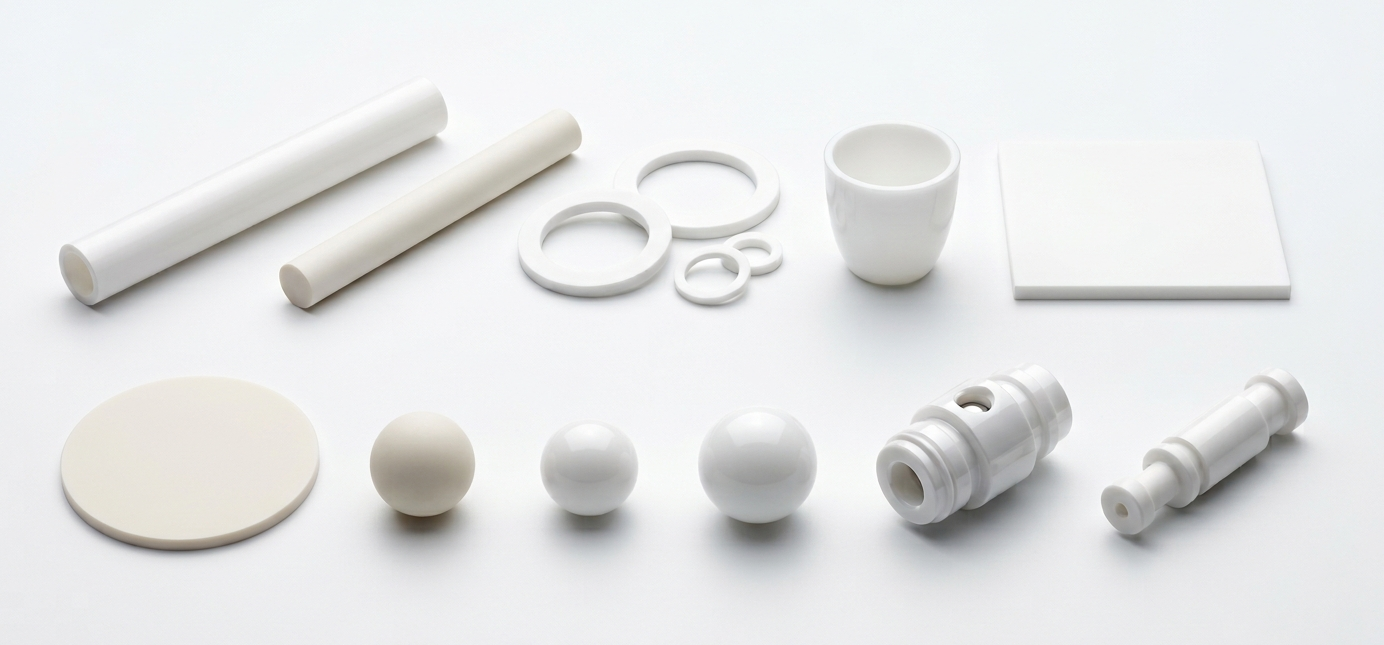
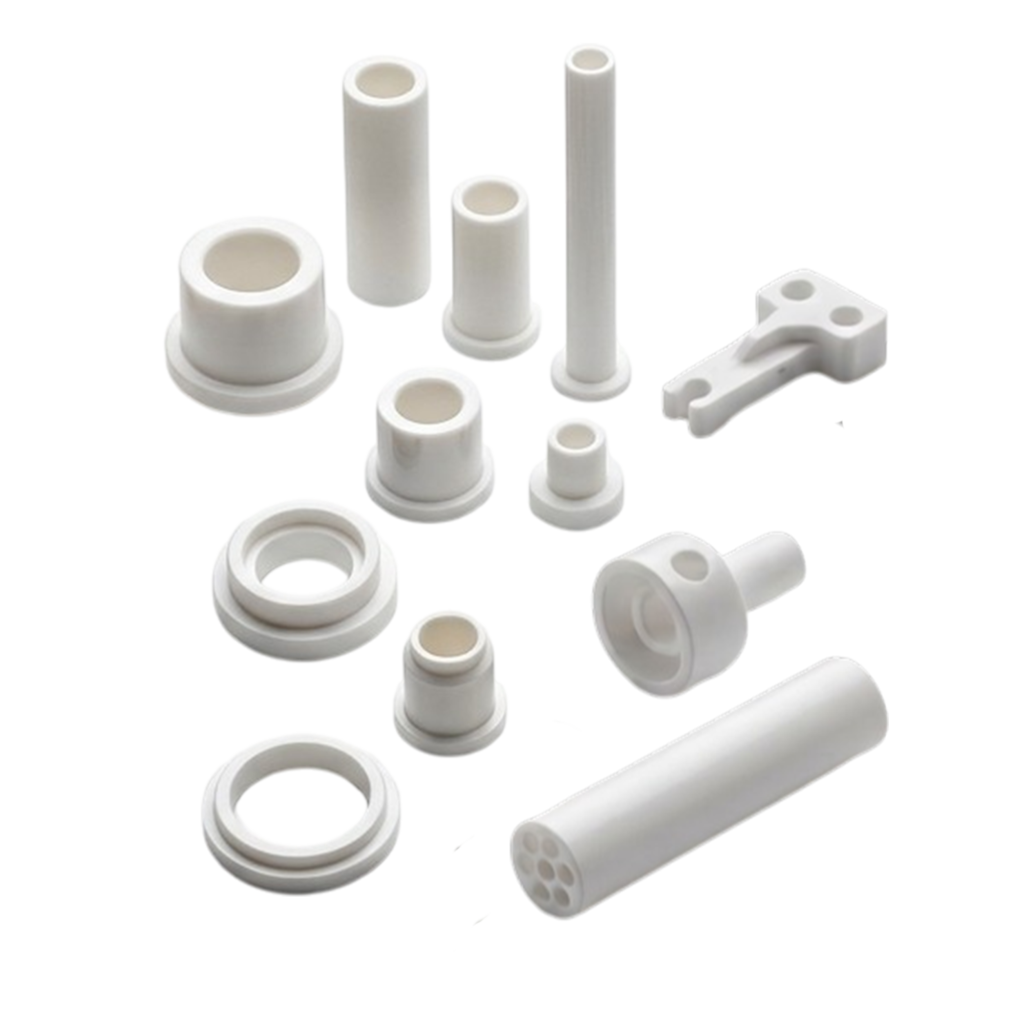
Tubes, Rods & Insulators: Standard or multi-bore protection tubes, high-voltage insulating bushes, and custom locating pins.
Crucibles & Labware: High-purity alumina crucibles (cylindrical, conical, rectangular) for thermal analysis and metallurgy.
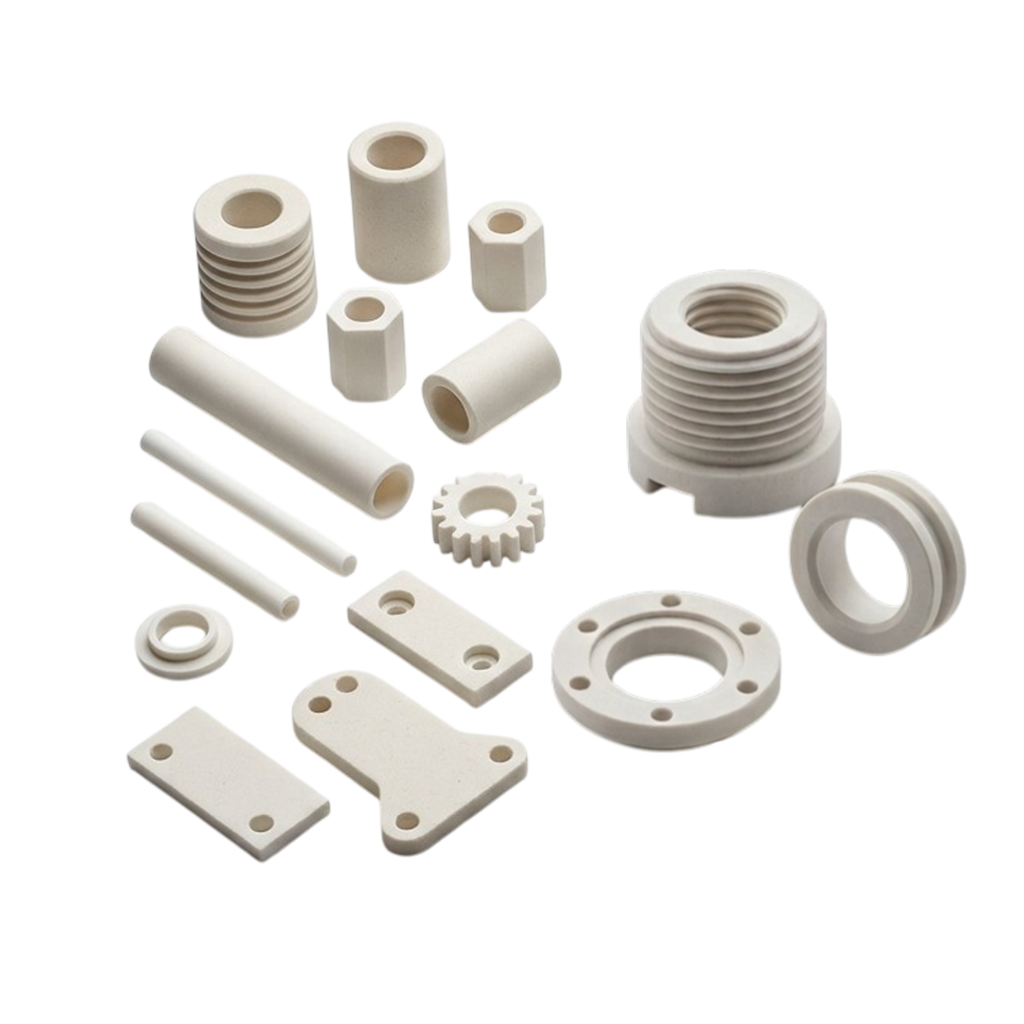
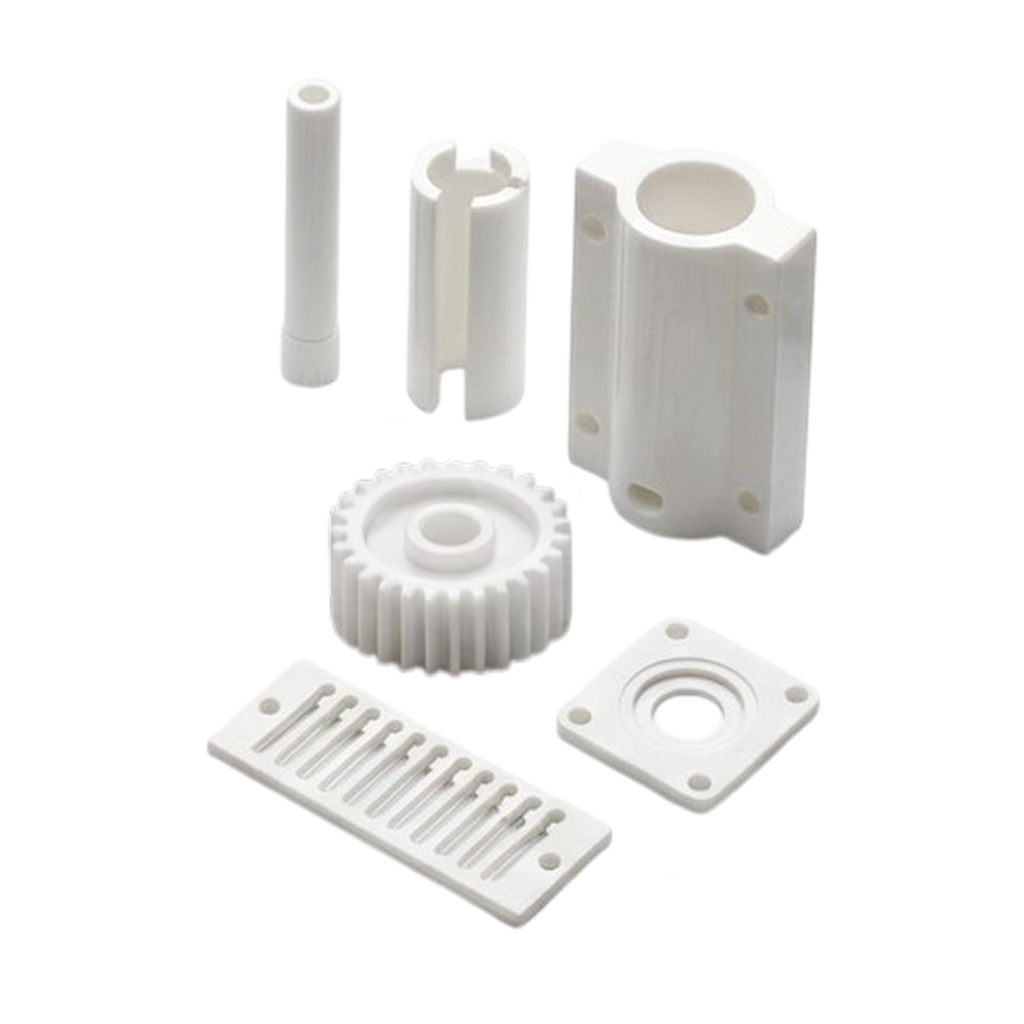
Complex CNC Parts: Custom disks, rings, seats, and valves with precise internal threads, counterbores, and slots.
Polished & Flat Plates: Thin substrates with surface roughness Ra < 0.1μm for electronics and laser systems.
Where Reliability Meets Extreme Environments
Application: Thermocouple tubes, resistor cores, insulating washers.
Selection Guide: 96% Alumina offers the best cost-to-performance ratio, providing sufficient dielectric strength and thermal shock resistance up to 1400℃.
Application: Pump plungers, sandblasting nozzles, ceramic seals, textile guides.
Selection Guide: 99% or 99.5% Alumina is recommended for its elevated hardness (~1500HV) and superior fine-grained structure to combat abrasive particles.
Application: Plasma etch rings, gas dispersion plates, chemical-inert pump components.
Selection Guide: 99.7% Alumina ensures minimum outgassing, high plasma corrosion resistance, and zero metallic ion contamination in ultra-clean environments.
Quality Assurance
100% Dimensional Inspection: Every batch is cross-checked using coordinate measuring machines (CMM) and micrometers against your approved CAD files before boxing.
Low MOQ for Prototypes: Welcome early-stage R&D testing, small-batch custom prototyping without high factory entry barriers.
Secure Export Packaging: Precision ceramics are fragile. We utilize customized pearl cotton foam matrices and vacuum sealing to ensure zero breakage during global air/sea transit.
